Simple Web Blog
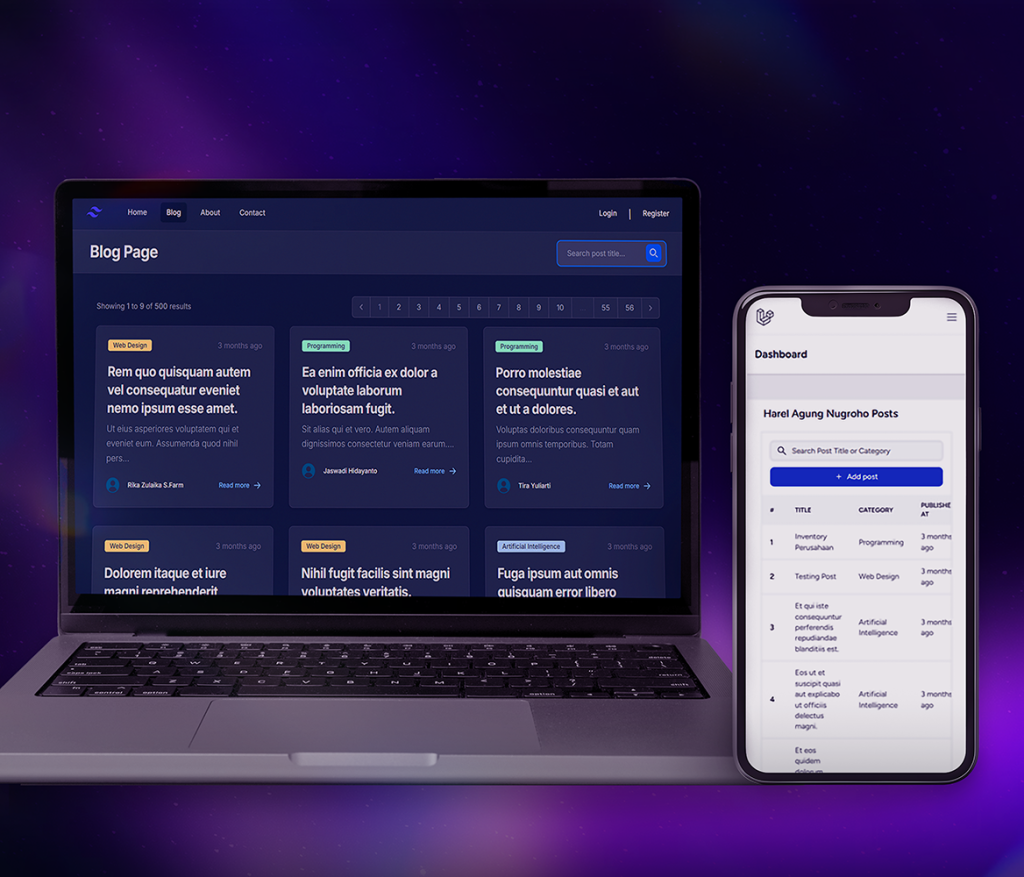
Simple Web Blog for Learning
The primary objective of this project is to serve as a hands-on learning platform to master the Laravel framework, with a focus on database optimization and data management. Specifically, the objectives are:
- Fundamental CRUD Implementation
Developing a content management system (blog) that enables users to efficiently create, read, update, and delete posts.
- Performance Optimization (N+1 Issues)
Practicing Eager Loading techniques using Eloquent to minimize the number of database queries when retrieving relationships between Post, Category, and User (Author).
- Database Relationship Understanding
Implementing One-to-Many relationships, where a single user or category can have multiple posts, in a real-world scenario.
Tech Stack
Laravel, Breeze, Tailwind CSS
Project Lable
Personal Project
Project Start Date
August, 2025
THE STORY
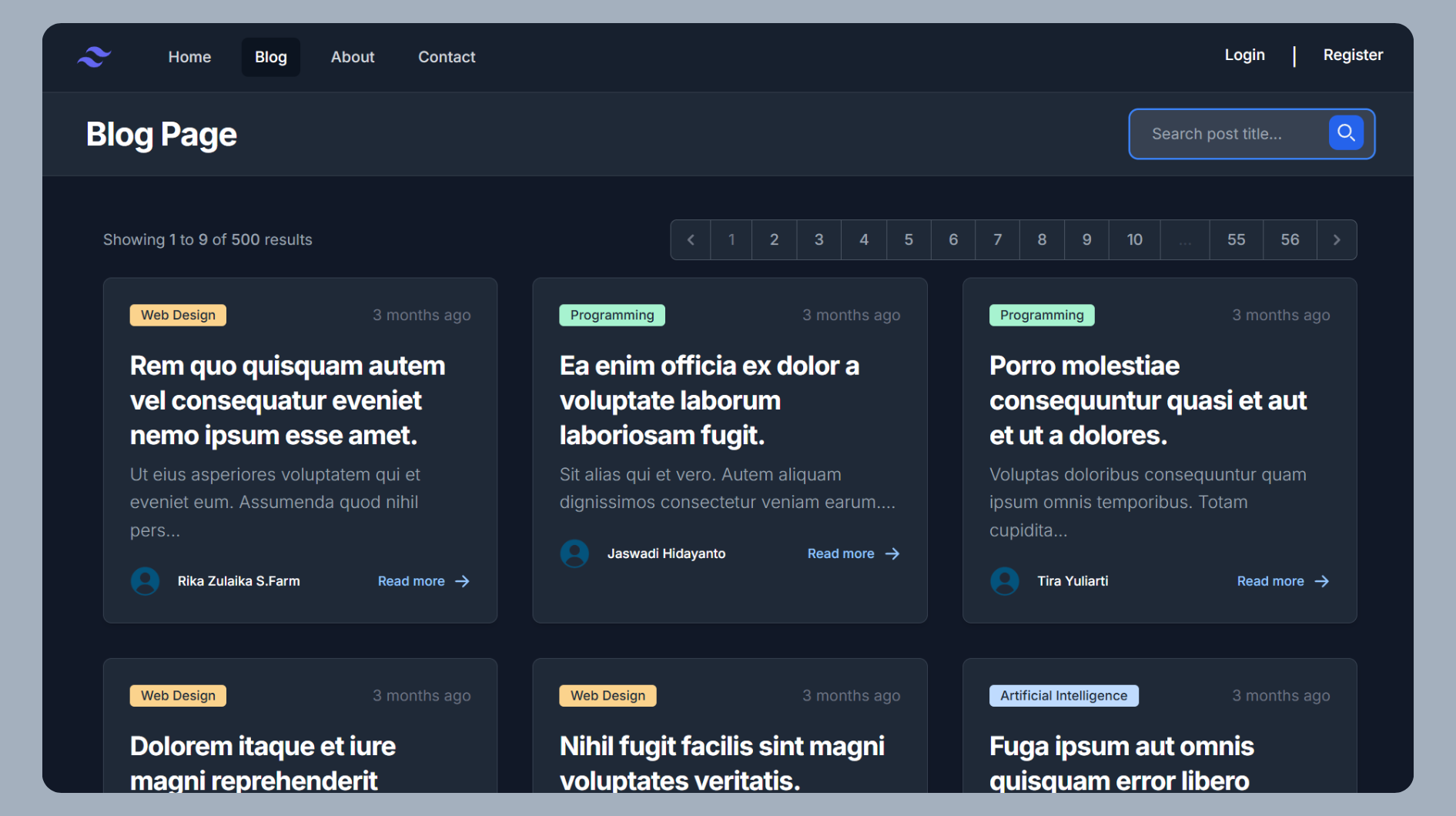
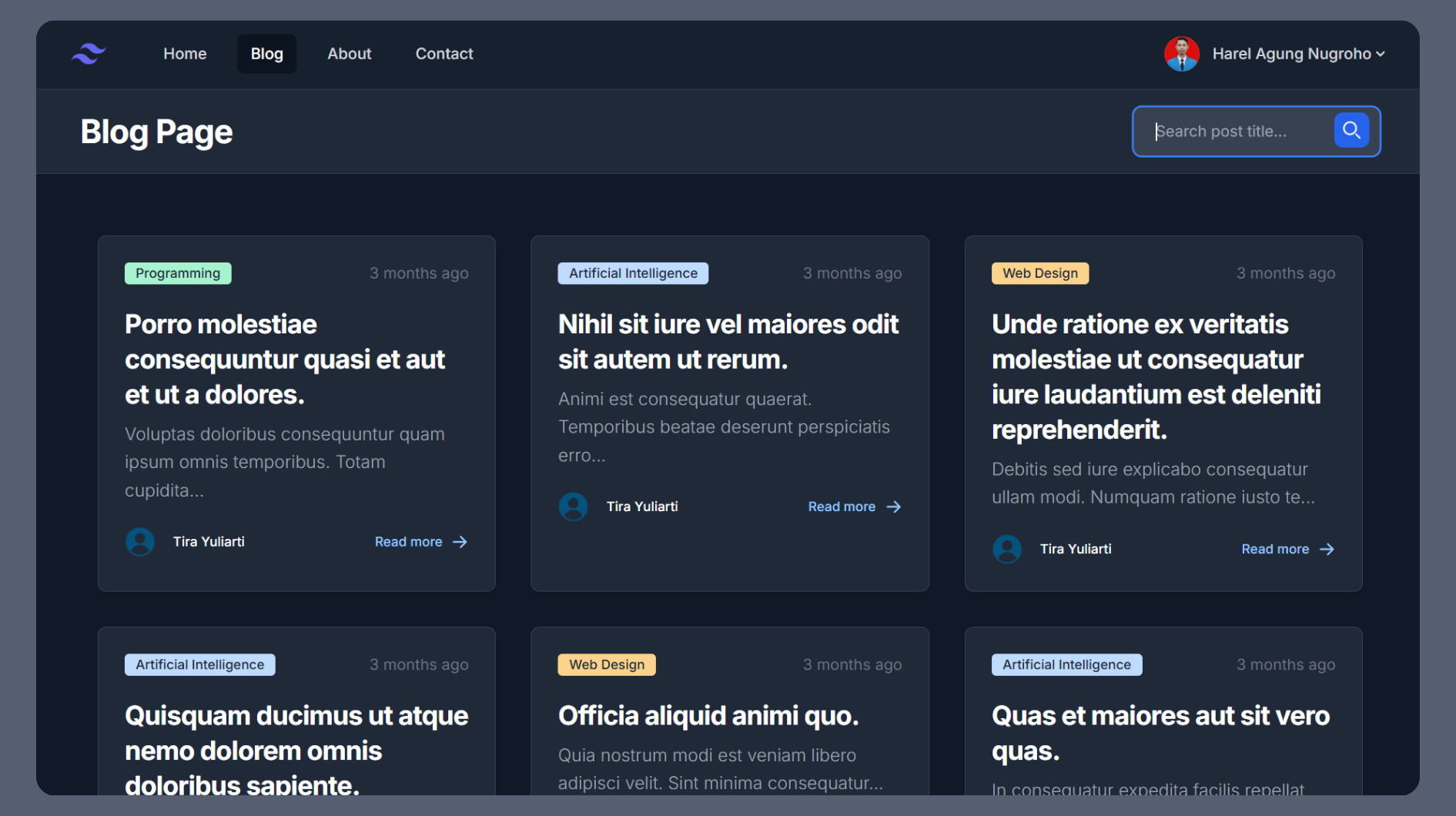
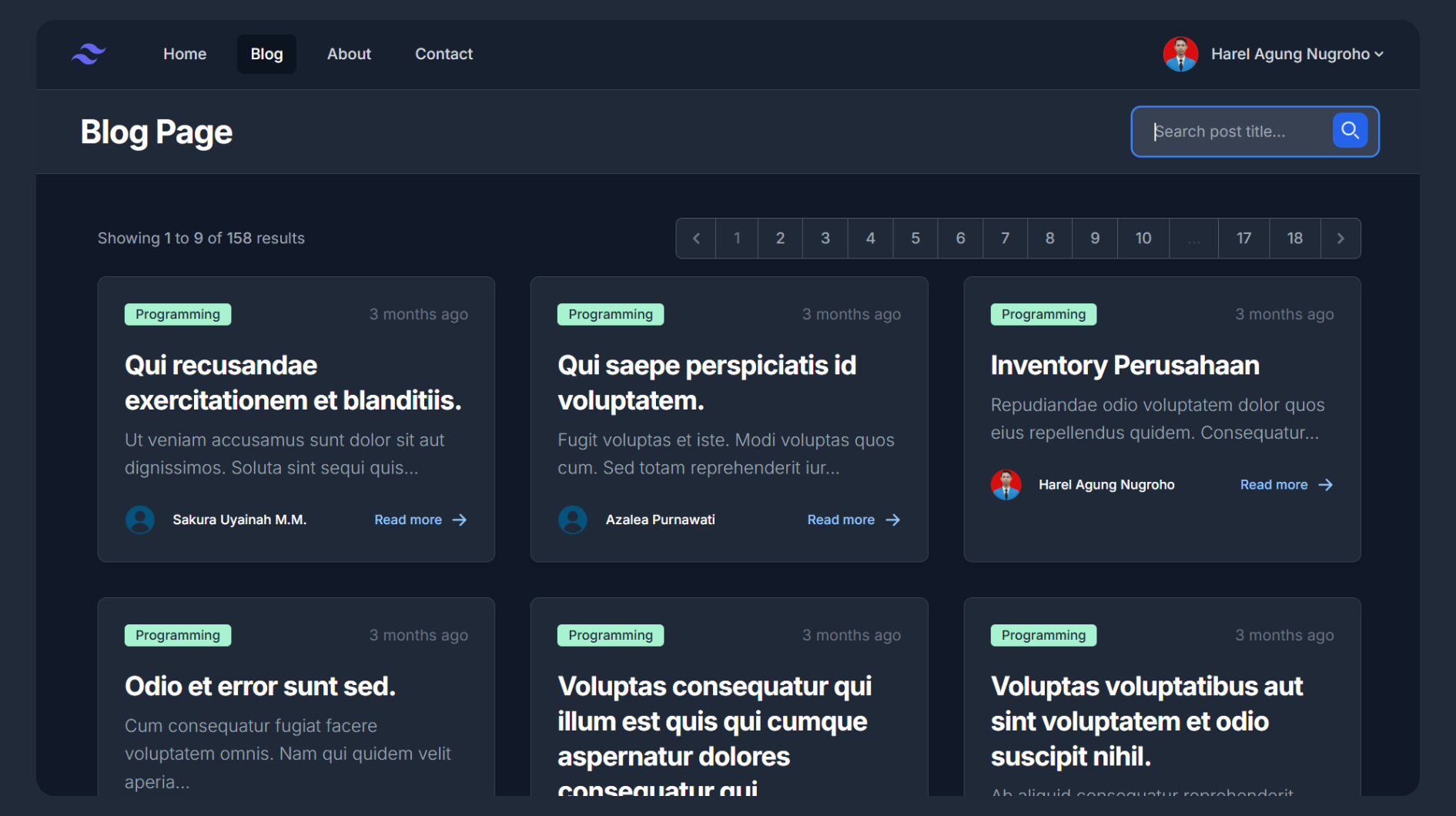
In web application development using an ORM such as Eloquent, a performance issue known as the N+1 Query Problem often occurs. This issue arises when the application runs one query to retrieve the main data, for example 10 posts, and then executes additional queries for each item to fetch related data, such as 10 separate queries to retrieve the author names. If there are 500 posts, as shown in the screenshot, the application could execute 501 queries, placing unnecessary load on the server. This project was developed to simulate a sufficiently large dataset in order to test how Laravel handles bulk data retrieval using the with() method. By applying this approach, hundreds of records can be displayed with only a few queries, while keeping the code clean and maintainable.
OUR APPROACH
Through this project, a functional Blogging Platform web application has been developed with the following features:
- Navigation and Filtering System
Users can browse posts globally, search by title, or filter posts by specific Category and Author using clean, slug-based URLs.
- Management Dashboard
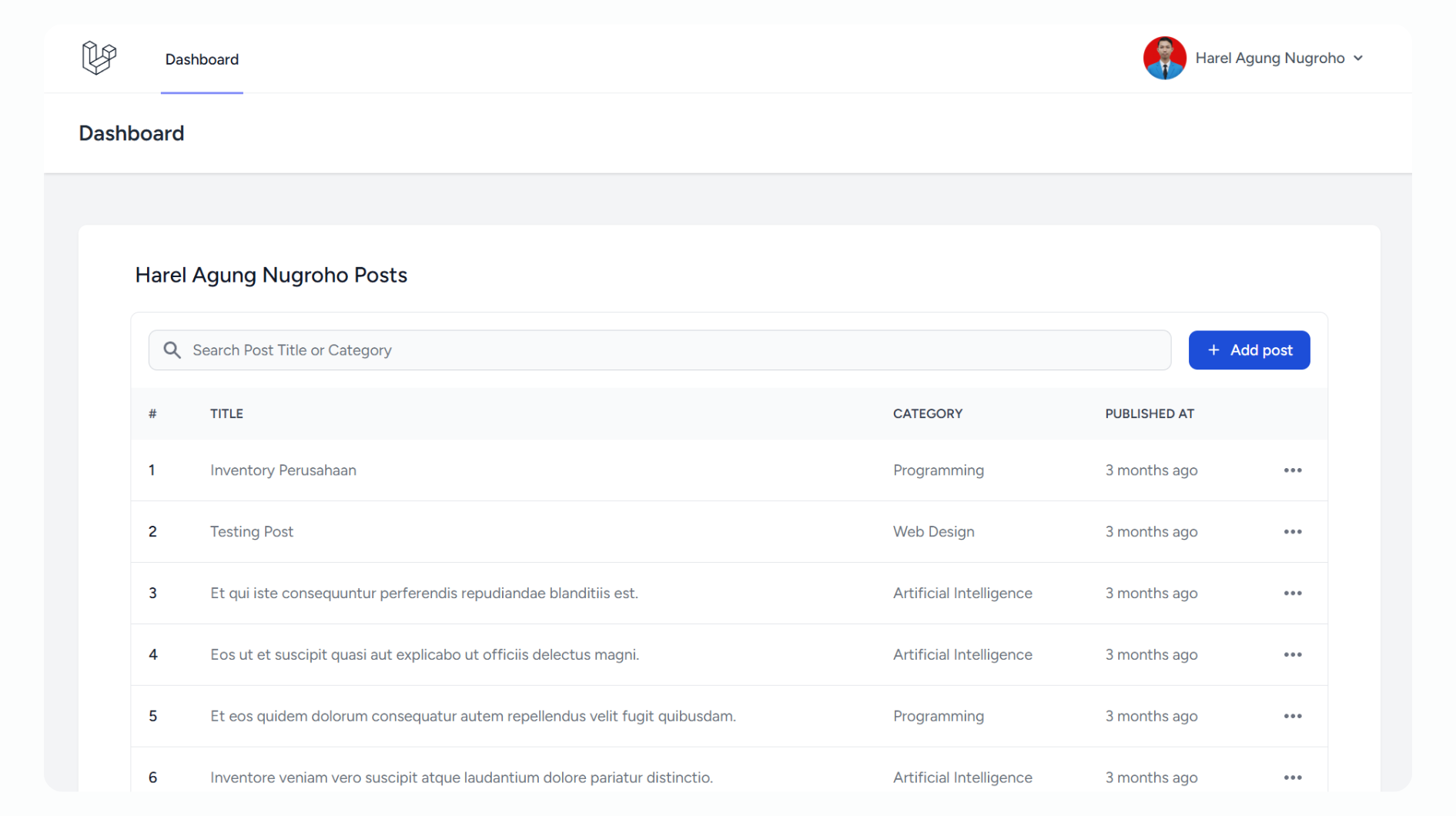
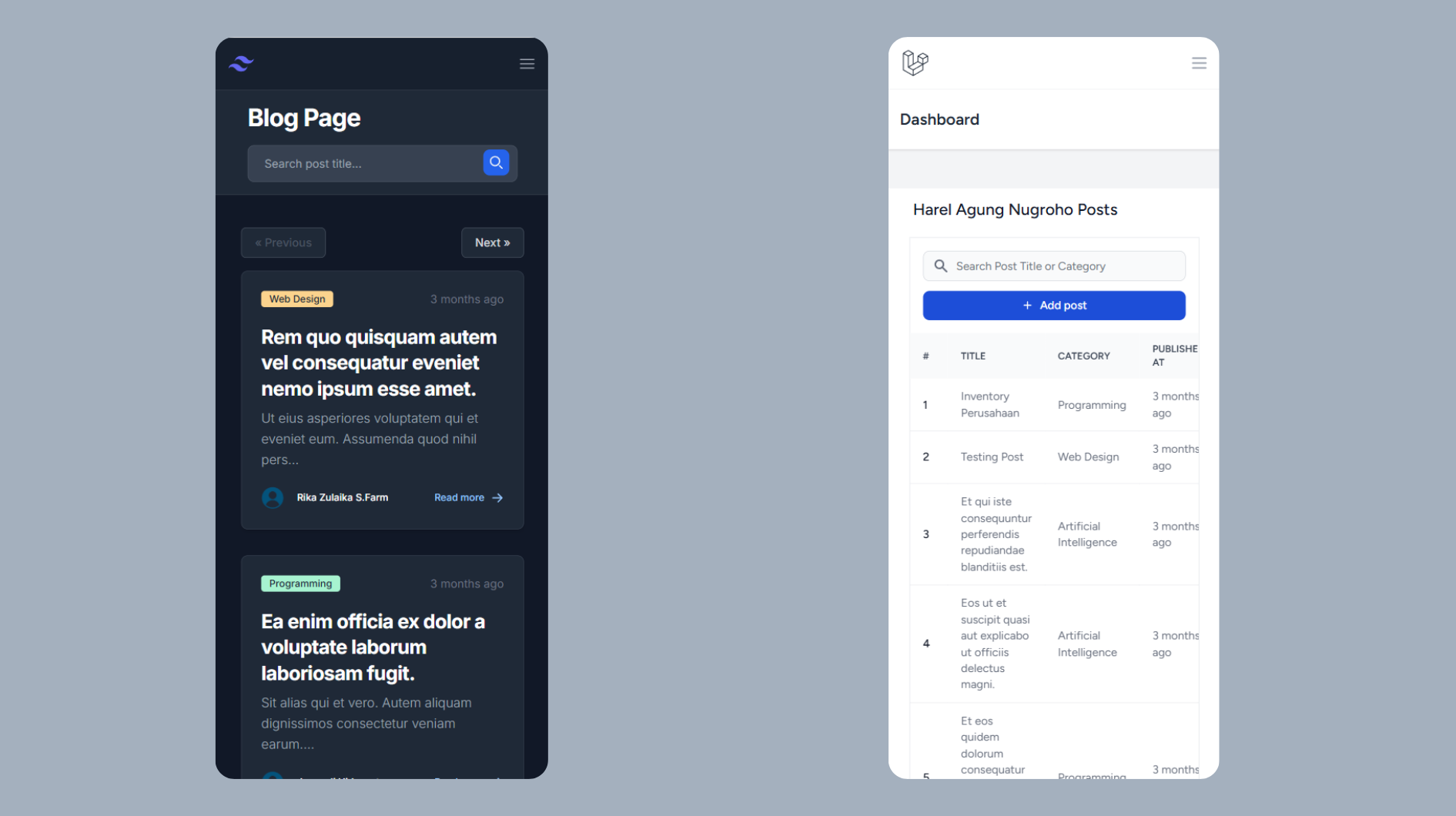
A dedicated dashboard page is available for authors to manage their own posts in a structured table format.
- Responsive Interface
A modern dark-themed UI that supports mobile-friendly display, as shown in the Mobile View.
- Basic Security Features
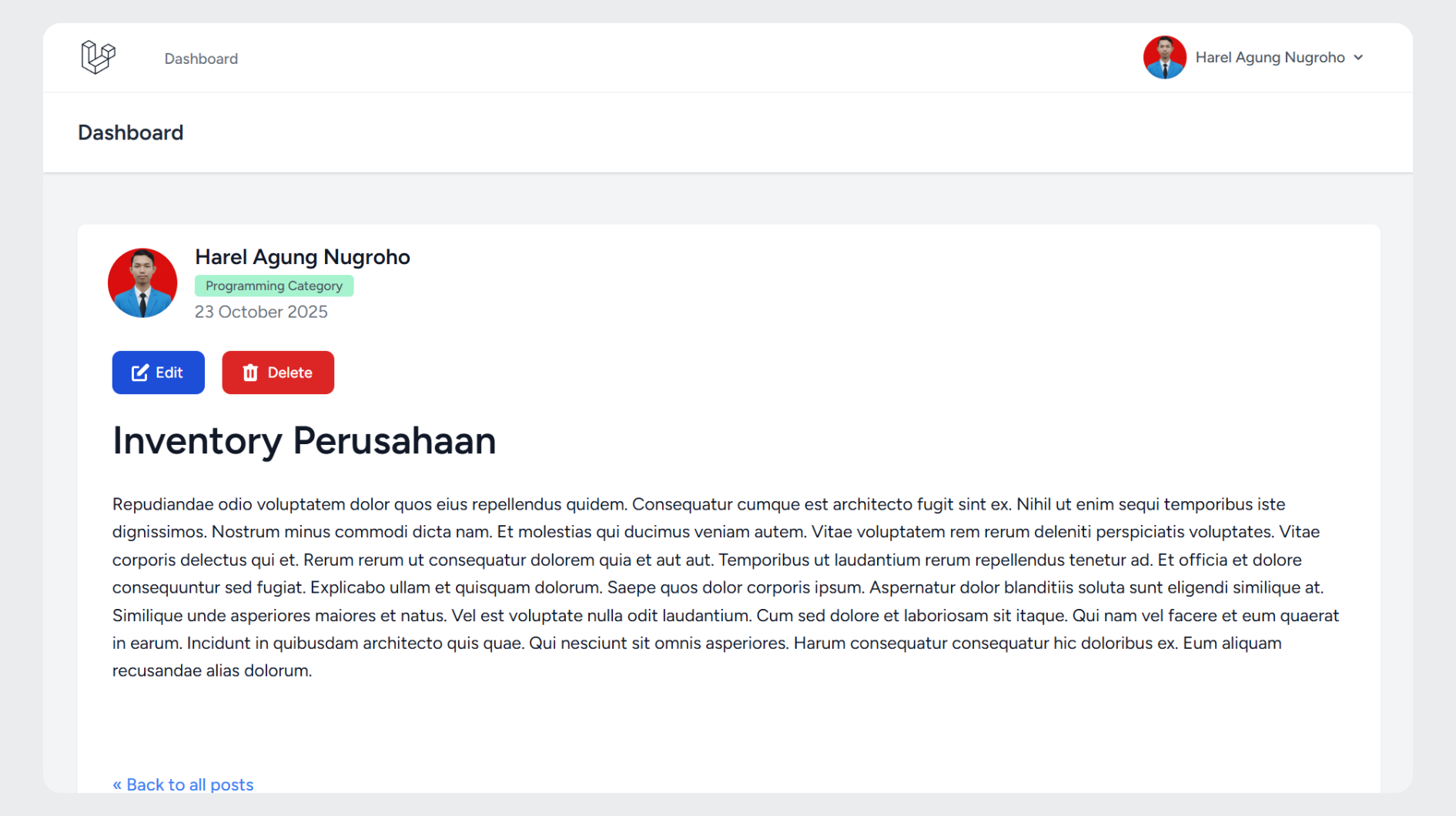
Implementation of login and registration functionality, as indicated by the Login and Register buttons, along with access control for Edit and Delete actions that are restricted to the original post owner.
- Database Efficiency
Successfully reduced database workload on the index and profile pages by applying controller-level optimizations to address the N+1 issue.